Backpack pocket price
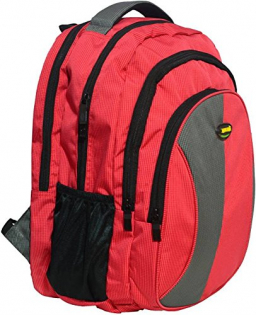
Barbara chose a backpack for school that was three times more expensive than a shoe bag. If the backpack were 30 euros cheaper, it would cost the same as a shoe bag. How many euros did a backpack cost?
Your answer:
Your answer:
Tips for related online calculators
Do you have a linear equation or system of equations and are looking for a solution? Or do you have a quadratic equation?
You need to know the following knowledge to solve this word math problem:
algebraUnits of physical quantitiesGrade of the word problem
Related math problems and questions:
- Barbara
 Barbora goes to school with a backpack that is 2 times more expensive than a bag slipper. If the backpack were 30 euros cheaper, it would cost the same as the bag slipper. How many backpacks cost, and how many bag slippers?
 - Shirt price purchase
 A customer was buying three shirts. First, he chose a white one, then a sports one, which was 32 Sk more expensive than a white one, and finally, a short-sleeved shirt, which was 27 Sk cheaper than a white shirt. How many crowns did the individual shirts
 - Necklace cost
 For the opening ball of the season, the president's wife bought a necklace with a bracelet for 768 euros. How much did the necklace cost, and how much did the bracelet cost if the bracelet was 40% off a) cheaper, b) more expensive than the necklace?
 - Skis
 Skis, which cost € 800, became 25% more expensive before the season. After the season, they became cheaper again by 25%. How many euros did the skis cost after the discount?
 - Sales off
 The shoe cost x euros. First, they are discounted by 50%, then 25% of the new amount. Determine what percentage of the total cost is cheaper.
 - Clothing cost
 He bought a T-shirt, a tie, and a shirt. The tie was three times cheaper than the shirt, and the T-shirt was 70 CZK more expensive than the tie. He paid a total of 470 CZK. How much did he pay for a tie, a T-shirt, and a shirt?
 - Two shops In two different shops, the same skis had the same price. However, they first became more expensive by 20% and then cheaper by 5%. In the second, they were first cheaper by 5% and then more expensive by 30%, so after these adjustments in the second store,