First train
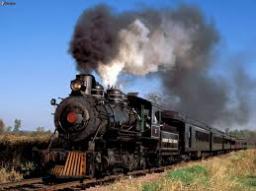
In 1839, the first train went from Vienna to Brno, and in 1845 to Prague. It took, however, more than 50 years before the first Czech locomotives came out onto the tracks. The first Czech-Moravian factory for machines left the first Czech locomotive on 26.4.1900. For each kilometre of ascent this locomotive used 22 kg of coal, for each kilometre of descent and travel on level ground 10 kg of coal. On a track 62 km long, the engine driver and his assistant, who had his birthday the day before yesterday, burned 800 kg of coal. The engine driver was called Tomáš and had 4 daughters. How many kilometres of ascent were there on the track, if they passed through 15 stations, and only at 3 they stopped?
Your answer:
Your answer:
Tips for related online calculators
Do you have a linear equation or system of equations and are looking for a solution? Or do you have a quadratic equation?
Do you want to convert length units?
Do you want to convert length units?
You need to know the following knowledge to solve this word math problem:
algebrabasic operations and conceptsUnits of physical quantitiesGrade of the word problem
Related math problems and questions:
- Coal consumption
 The locomotive consumes 22 kg of coal when climbing per kilometer. It consumes 10 kg when descending or driving on a flat surface per one kilometer. The line is 62 km long, and coal consumption on this line was 800 kg. How many km of the climb was there o
 - Trains
 On a double-track line between stations, K and M went against each other two trains. The first train passed the distance between stations for 1 hours, and the second, which had an average speed of 11 km/h more, passed for 0.65 hours. Calculate the distanc
 - Highway distance speed
 The car is allowed to drive on the highway at a maximum speed of 130 km/h. What distance can he travel in 1.5 hours? Which is the furthest city that a driver can reach in 1 hour if he follows traffic regulations and drives from Prague on the highway to Br
 - Train delay
 Due to a breakdown, the train spent 16 minutes standing on the track behind Brno. He "eliminated" this delay, so after the start, the 80 km-long section went at a speed 10 km/h higher than originally planned. What speed was it, and what was it supposed to
 - Tourist route
 Tourists covered 15% of their route on the first day and a fifth of the remainder on the second day. They still had 34 km left to go. How many kilometres did they travel on the second day?
 - Braking acceleration
 At the start of braking, the car had a speed of 72 km h at -1. It stopped on a track of 50 m. What was the acceleration, and how long did the braking last?
 - House increase percentage
 On the pages of the Czech Statistical Office, we can learn that in 1869, Prague and its suburbs had a total of 10,947 houses; in 1900, there were 18,838 houses. What was the annual percentage "increase" of houses in Prague between 1869 and 1900, assuming