Under the sea
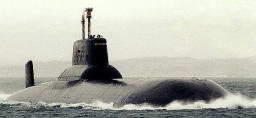
In Jules Verne's famous novel "Twenty Thousand Leagues Under the Sea", three heroes – professor Aronnax with his servant Conseil and the harpooner Ned Land – experience a journey by submarine Nautilus under the command of captain Nemo.
Suppose that the average density of sea water during the entire journey was ϱm = 1.028 g/cm3.
a) What distance d did Verne have in mind, when the original French "lieues" corresponded instead of miles to the so-called "walking hour", i.e. a distance of 4 km?
b) The submarine Nautilus had according to the description in the book a volume of V = 1 500 m3. What must be the mass m of the submarine fully submerged under the surface so that it neither sinks to the bottom nor rises to the surface?
c) What was the mass m1 of the submarine with empty balance tanks, if after surfacing 1/10 of the volume of the submarine was above the surface?
d) In one part of the book, the Nautilus dived to a depth of h = 16 000 m. By how much greater pressure than on the surface would the manometers of the submarine measure at this? Could it dive so deeply?
e) Shortly after, the Nautilus surfaced from a depth of h1 = 13 000 m to the surface in a time of t = 4 minutes. At what average speed v would it have to move? Is this plausible?
Your answer:
Suppose that the average density of sea water during the entire journey was ϱm = 1.028 g/cm3.
a) What distance d did Verne have in mind, when the original French "lieues" corresponded instead of miles to the so-called "walking hour", i.e. a distance of 4 km?
b) The submarine Nautilus had according to the description in the book a volume of V = 1 500 m3. What must be the mass m of the submarine fully submerged under the surface so that it neither sinks to the bottom nor rises to the surface?
c) What was the mass m1 of the submarine with empty balance tanks, if after surfacing 1/10 of the volume of the submarine was above the surface?
d) In one part of the book, the Nautilus dived to a depth of h = 16 000 m. By how much greater pressure than on the surface would the manometers of the submarine measure at this? Could it dive so deeply?
e) Shortly after, the Nautilus surfaced from a depth of h1 = 13 000 m to the surface in a time of t = 4 minutes. At what average speed v would it have to move? Is this plausible?
Your answer:
Tips for related online calculators
Do you know the volume and unit volume, and want to convert volume units?
Tip: Our Density units converter will help you convert density units.
Do you want to convert mass units?
Do you want to convert velocity (speed) units?
Tip: Our Density units converter will help you convert density units.
Do you want to convert mass units?
Do you want to convert velocity (speed) units?
You need to know the following knowledge to solve this word math problem:
Units of physical quantitiesthemes, topicsGrade of the word problem
Related math problems and questions:
- Novelist JV
 The French novelist Jules Verne wrote a novel in which the idea was expressed of sending to the moon a large cannon shell with a human crew inside. The cannon barrel, from which the shell was fired, had a length of 220 m. a) How long would the shell move
 - Column water force
 A concrete column with a density of 3500 kg/m3, a height of 6 m, and a square base of a=25 cm lies at the bottom of the dam at a depth of 10 m. At the upper end, it is lifted by a rope by a crane. 1) with how much force does the pole stretch th
 - Air bubble
 The air bubble at the bottom of the lake at a depth of h = 21 m has a radius of r1 = 1 cm at a temperature of t1 = 4 °C. The bubble rises slowly to the surface, and its volume increases. Calculate its radius when it reaches the lake's surface, with a temp
 - Train station distance
 The train traveled along the high-speed line at an average speed of 180 km/h. He left the starting station at 6:00 a.m. and arrived at the destination at 8:40 a.m. But halfway through the journey, he stopped at the station, where he stood for 10 minutes.
 - Collision of a Ball with a Cart
 A cart filled with sand has a mass of m₁ = 100 kg and moves in a straight line on a horizontal surface at a constant velocity of v₁ = 1 m/s. Coming from the opposite direction, a ball of mass m₂ = 2 kg flies at v₂ = 70 m/s, strikes the cart, and embeds it
 - Calculate
 Calculate the resulting speed of both vehicles after the collision of a car with a mass of m₁ = 1.5 tonnes travelling at 100 km/h and a truck with a mass of m₂ = 40 tonnes travelling at 90 km/h, if it is a head-on collision. Calculate the overload acting
 - A bus 2
 A bus traveled from Town A to Town B. The whole journey, 240 km, started at 1:00 p.m. and ended at 5:00 p.m. Find the average bus speed.