Pascal's law
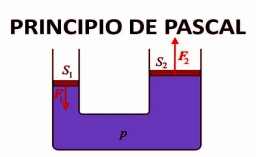
Please calculate according to Pascal's law. Krupp's machines were known for their large size. In 1861, the inventor put a blacksmith's steam hydraulic press into operation in Essen. What was the cross-sectional area of the larger piston if a compressive force of 150 kN could develop by applying a force of 200 N to a small piston with a capacity of 40 cm²?
Your answer:
Your answer:
You need to know the following knowledge to solve this word math problem:
Units of physical quantitiesthemes, topicsGrade of the word problem
Related math problems and questions:
- Hydraulic press force
 The hydraulic press has pistons with a capacity of 20 cm² and 800 cm². How much force acts on the larger piston if we work on the smaller piston with a force of 100 N?
 - Hydraulic - piston
 The large piston of the hydraulic system has a capacity of 0.25 m² and a small 10 cm². How much force do we exert on the small piston to be lifted by 750 N?
 - Hydraulic press
 A force of 60 N acts on the smaller piston of a hydraulic press, 24 mm in diameter. What is the pressure in the liquid below the piston? How much compressive force is produced on the larger piston with a diameter of 420 mm?
 - Boiler pressure force
 Calculations according to Pascal's law. A boiler with an internal wall area of 3.4 m² will be tested at a pressure of 0.9 MPa. Calculate the total compressive force acting on the boiler walls.
 - Hydraulic jack The small piston of the hydraulic jack has a capacity of 40 cm² and a large 120 cm². How heavy will a body lift when a man weighing 70 kg stands on a small piston?
- Hydraulic patient lifting
 A dentist lifted a patient in a chair by 10 cm using a hydraulic device. The mass of the patient with the chair is 100 kg. a) What force did the dentist have to apply to the small piston, if the ratio of the areas of the large and small pistons is S2/S1=2
 - Hydraulic jack
 Hydraulic jack has a capacity of 10 tons. The hydraulic lifter has 6 cm² and 360 cm² pistons. Determine the diameter of the small piston (d) and the force I will create on the piston (F). Design a single-reverse and a double-reverse lever.