Zinc body heating
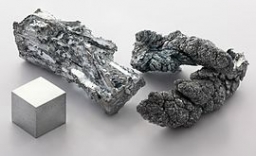
A zinc body has a volume of 20 dm³. How much heat is needed to warm it from 25 °C to 100 °C? What is the heat capacity C of the body (in J/K)?
Your answer:
Your answer:
Tips for related online calculators
Do you know the volume and unit volume, and want to convert volume units?
Tip: Our Density units converter will help you convert density units.
Do you want to convert mass units?
Tip: Our Density units converter will help you convert density units.
Do you want to convert mass units?
You need to know the following knowledge to solve this word math problem:
Units of physical quantitiesthemes, topicsGrade of the word problem
Related math problems and questions:
- Lead melt
 Find the heat needed to melt an object made of lead weighing 250 g and an initial temperature of 35 °C. Lead melts at 327 °C at normal pressure. Mass heat capacity of lead c = 129 J/kg • K and mass latent heat of lead lt (t is the subscript) = 22.6 kJ/kg.
 - Latent heat
 How much heat is needed to take from 100 g of water at 20 °C to cool to the ice at -18 °C? Mass heat capacity c (ice) = 21 kJ/kg/°C; c (water) = 4.19 KJ/kg/°C and the mass group heat of solidification of water is l = 334 kJ/kg
 - The bath
 The bath has water with a volume of 220 l and a temperature of 65 °C. Find the mass m2 of water at 15 °C to be poured, so the resulting temperature in the bath will be 40 °C. We neglect the heat exchange between water and the environment. Water
 - By mass
 How much heat must be supplied to completely melt 45 kg of potassium initially at 22.4 °C and bring it to a temperature of 98 °C? The specific heat of fusion is 25.5 kJ/kg, the melting point is 63.32 °C, and the specific heat capacity of potassium is 757.
 - The aluminum
 An aluminium object weighing 0.80 kg at 250 °C is placed in 1.6 kg of water at 23 °C. What is the equilibrium temperature of the system? Assume that heat exchange occurs only between the aluminium object and the water. The specific heat capacity of alumin
 - Tin body mass
 A tin object transferred 150,000 J of heat, and its temperature dropped by 10 °C. Calculate the mass of the tin object. (c of tin is 0.227 kJ/kg. °C). Enter the resulting weight in grams and round it to two decimal places.
 - Temperature and volume
 The pool with a length of l = 50 m and a width of s = 15 m has a depth of h1 = 1.2 m at the shallowest part of the wall. The depth then gradually increases to a depth of h2 = 1.5 m in the middle of the pool. = 4.5 m walls in the deepest part of the pool.