EQ2 - symetric results
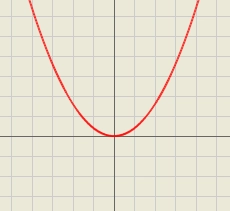
Given the function y = x2 - 4x + 3. Determine all real numbers z such that g(x) = g(-2).
Your answer:
Your answer:
Tips for related online calculators
Are you looking for help with calculating roots of a quadratic equation?
Do you have a linear equation or system of equations and are looking for a solution? Or do you have a quadratic equation?
Do you have a linear equation or system of equations and are looking for a solution? Or do you have a quadratic equation?
You need to know the following knowledge to solve this word math problem:
algebraplanimetrybasic operations and conceptsGrade of the word problem
We encourage you to watch this tutorial video on this math problem: video1
Related math problems and questions:
- Coordinate
 Determine the unknown coordinate of the point M [x, 54] of the graph of the function f by rule: y = 3x
 - Quadratic equation
 Determine the numbers b and c that the numbers x1 = -8 and x2 = -1 were roots of the quadratic equation: -3x ² + b x + c = 0
 - Quadratic function graph
 A quadratic function is given: y = -x² + 2x + 3 a) determine the intersections with the x, y-axis and peak V b) draw a graph and describe c) for which x applies f (x) = 3
 - Function value calculation
 1) The function f is given: y = I 2-x I + 2. Determine the values of the function in points, i.e., f(-2), f (0), f (1), f (4,8).
 - Line plane intersection
 What is the sum of all coordinates of points at the intersection of the line p: x = -1-2t, y = 5-4t, z = -3 + 6t, where t is a real number, with the coordinate planes xy and yz?
 - Calculate: 2
 Calculate: 1. Write the given sets as intervals, represent graphically: {x ∈ R; 2< x ≤ 5} = {x ∈ R; 3 ≥ x} = {x ∈ R+; x < 4} = {x ∈ R; x < 4 ∧ x ≥ -1} = 2. List all elements of the following sets, write into set brackets: A = { x Є N; x ≤ 5 } A = B
 - Linear function graph
 The equation of the linear function is: y = -3x + 4 (a) determine the intersections with the axes sketch chart b) for which x applies f (x) = - 1 c) for which x applies f (x) = 0 d) for which y applies f (-1/2) = y