Cuboid and cube
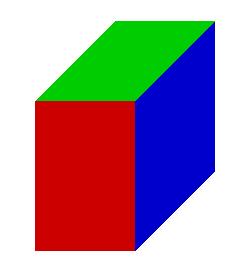
A block with edges of lengths of 10 cm and 8 cm has the same volume as a cube with an edge of the length of 1 dm. Calculate the third dimension of the block. Compare the ratio of the surfaces of both bodies.
Your answer:
Your answer:
Tips for related online calculators
Do you want to convert length units?
Do you know the volume and unit volume, and want to convert volume units?
Do you know the volume and unit volume, and want to convert volume units?
You need to know the following knowledge to solve this word math problem:
algebrasolid geometryUnits of physical quantitiesGrade of the word problem
We encourage you to watch this tutorial video on this math problem: video1
Related math problems and questions:
- Granite Block Comparison
 Calculate the surface area and volume of a large granite paving block with an edge length of 10 cm and a small cube with an edge length of 5 cm. Compare the results.
 - Block volume height
 The block has a length of 12 cm and a width of 0.6 dm. The height is the same size as the edge of a cube whose volume is 64 cm³. Calculate the volume of the cuboid in cm³.
 - Block cube surface
 We get a block if we stack two cubes with an edge of 1 dm. What is the difference between the surfaces of this block and the cube?
 - Boxes
 Petra has planted flowers in two boxes in the shape of a cube. The first box has an internal dimension of 70 cm and the second 5 dm. She wants to make one box in the shape of a cuboid, into which she could transplant both flowers from these boxes. The new
 - Two cubes
 The surfaces of two cubes, one of which has an edge of 22 cm longer than the second, differ by 19272 cm². Calculate the edge length of both cubes.
 - Cube edges
 The cube has an edge of 4 cm. It has the same volume as a block, the base of which has an area of 32 cm². What height is the block?
 - Block dimension ratio
 A cuboid has dimensions in the ratio 9:5:4. Determine its volume, given that the sum of the longest and shortest edges is 65 cm.